
“A society grows great when people plant trees under whose shade they’ll never sit.”
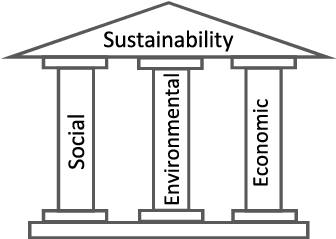
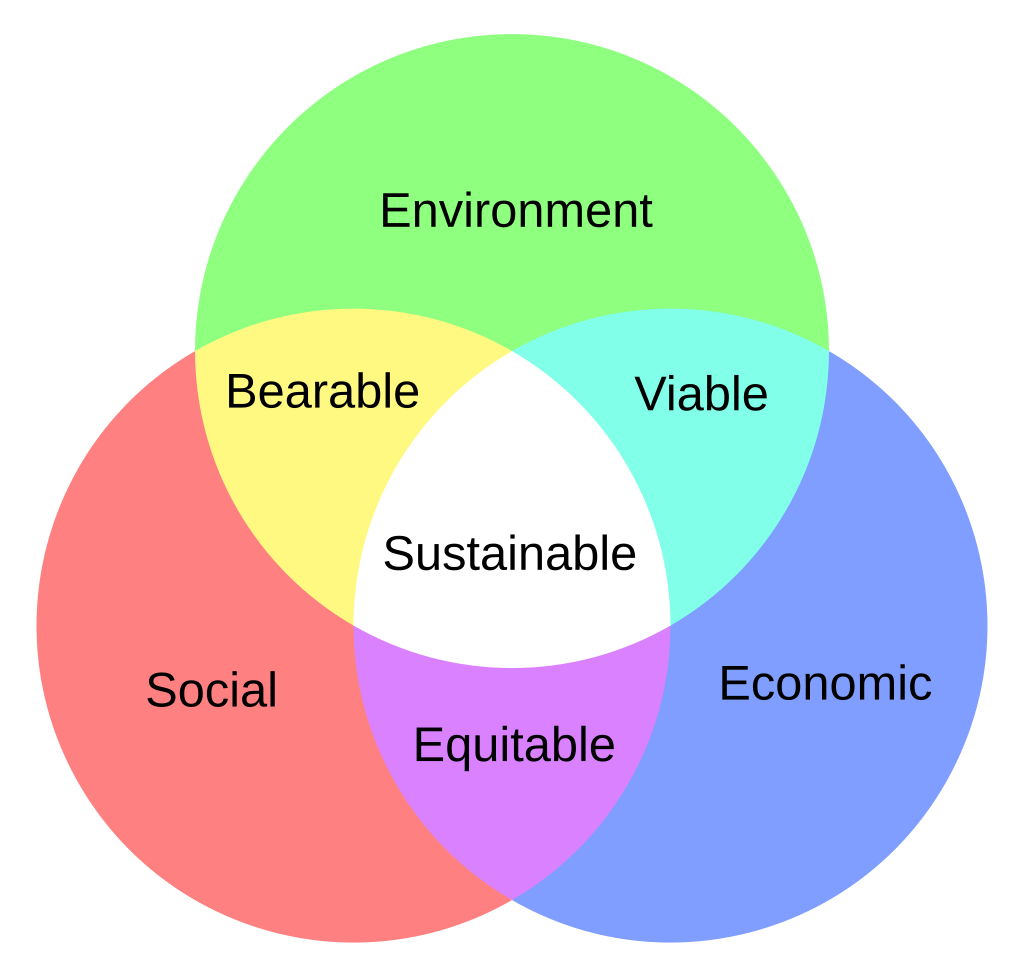
Sustainability is the ability to continue over a long period of time or to otherwise maintain, endure, and support. The foundational pillars required to create a sustainable community can be broken into 3 distinct areas of sustainability: Social, Environmental, and Economic. It’s essential to the long-term viability of a community that these dimensions are balanced.
Social
Social sustainability looks like the protection of inherent civil liberties, an impartial justice system, safety from violence, fair access to opportunities, and cultural meaning. To maintain this aspect of sustainability requires supporting the institutions created to protect these ideals. Transparent democratic governments, strong public education systems, capable emergency services, community events, and moral laws are some of the tangible ways we can be socially sustainable.
Environmental
Conserving a healthy environment is essential to the continuing prosperity of humanity. Preserving the ecosystem that supports human life for future generations is a requirement to becoming sustainable. Public policy should remove the incentive for entities to pollute by properly distributing the social costs of negative externalities. In our community we can limit our dependence on nonrenewable natural resources by supporting investment in sustainable alternatives. Improving energy efficiency and economic growth aren’t mutually exclusive goals.
Economic
Economic growth is important in achieving the welfare goals for basic human needs: food, water, health, and shelter. Economic growth should be a main objective, but at rates that are tenable and in targeted areas that are desired. We can create this robust economic development by encouraging affordable housing, building sustainable infrastructure, and being fiscally prudent.